
What if every young person started their career with the confidence to manage their money and plan for their future?
For many of us, that wasn’t our experience.
We may have learnt about maths at school, but far fewer of us were taught how to budget, build savings, understand debt or start planning for the financial future we want.
That’s why we were delighted to work with the Association of Apprentices (AoA) as part of its Get Ahead Series, delivering a “Money Matters: Practical Finance for Apprentices” workshop to apprentices and early career professionals across its network.
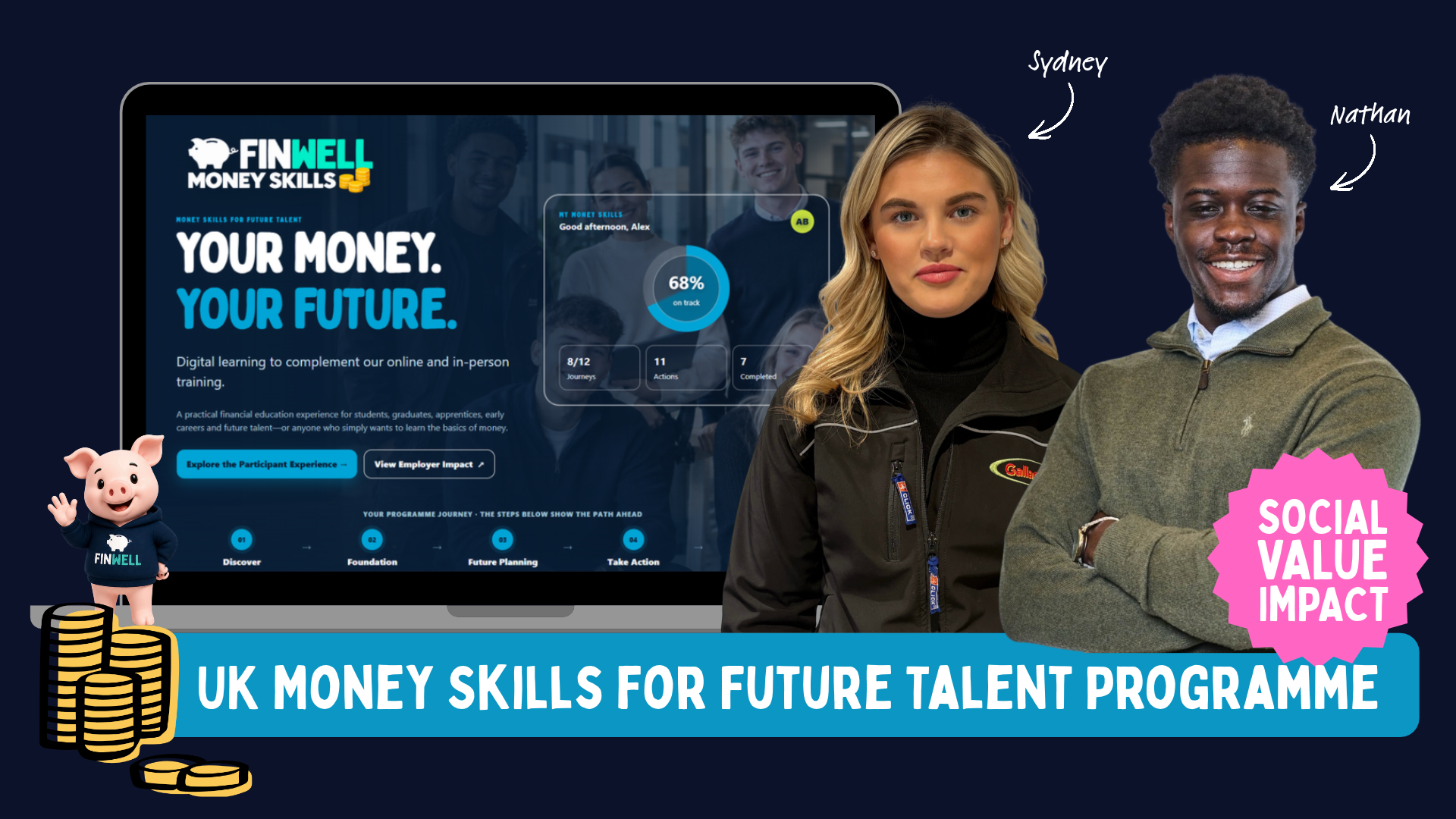
The session drew on module two of our Money Skills for Future Talent programme, exploring financial goal setting, saving, investing and building long-term financial resilience.
The feedback was incredibly encouraging:
100% of attendees found the workshop useful.
87.5% reported increased confidence in managing their finances.
100% said they would recommend the workshop to others.
For us, these results show what can happen when people are given the time and space to learn about money in a practical, engaging and supportive way.
Why financial wellbeing matters for apprentices
Starting an apprenticeship is an exciting step. It can also bring new responsibilities and financial decisions at a time when someone is adjusting to work, study and a changing lifestyle.
We spoke to Lindsay Conroy, CEO at the Association of Apprentices who explained:
“Financial wellbeing plays a significant role in an apprentice’s ability to succeed, both in the workplace and in their personal life.
Many apprentices are managing their own income and expenses for the first time, often alongside rising living costs. They may be thinking about travel, housing, saving, debt or how to make their money last until payday all while working towards their qualifications and building their careers.
Developing confidence in budgeting, saving, managing debt and planning ahead can help apprentices reduce financial stress, make informed decisions and focus on achieving their potential throughout their apprenticeship.
It’s a reminder that financial wellbeing is connected to much more than the numbers in a bank account. It can affect how people feel, how they engage at work and how confidently they make decisions about their future.”
Financial education is still arriving too late
Earlier in 2026, the Association of Apprentices carried out its AoAVoice Financial Education & Apprentices survey to better understand apprentices’ experiences.
Their findings highlighted some significant gaps:
19% of apprentices said they had received no financial education before starting their apprenticeship.
40% said they lacked confidence managing money when they started.
More than half said financial education arrived too late or not at all.
These figures show why we need to start conversations about money earlier—and make sure those conversations continue as people enter work and encounter new financial decisions.
AoA works with apprentices, employers, training providers and policymakers to understand the challenges affecting apprentice success and wellbeing. It is using insights like these to advocate for earlier and more effective financial education, so young people can develop practical money skills before and throughout their apprenticeship journey.
That’s something we’re proud to support.
Turning awareness into action
Knowing that financial education matters is one thing. Making it accessible, relevant and engaging is another.
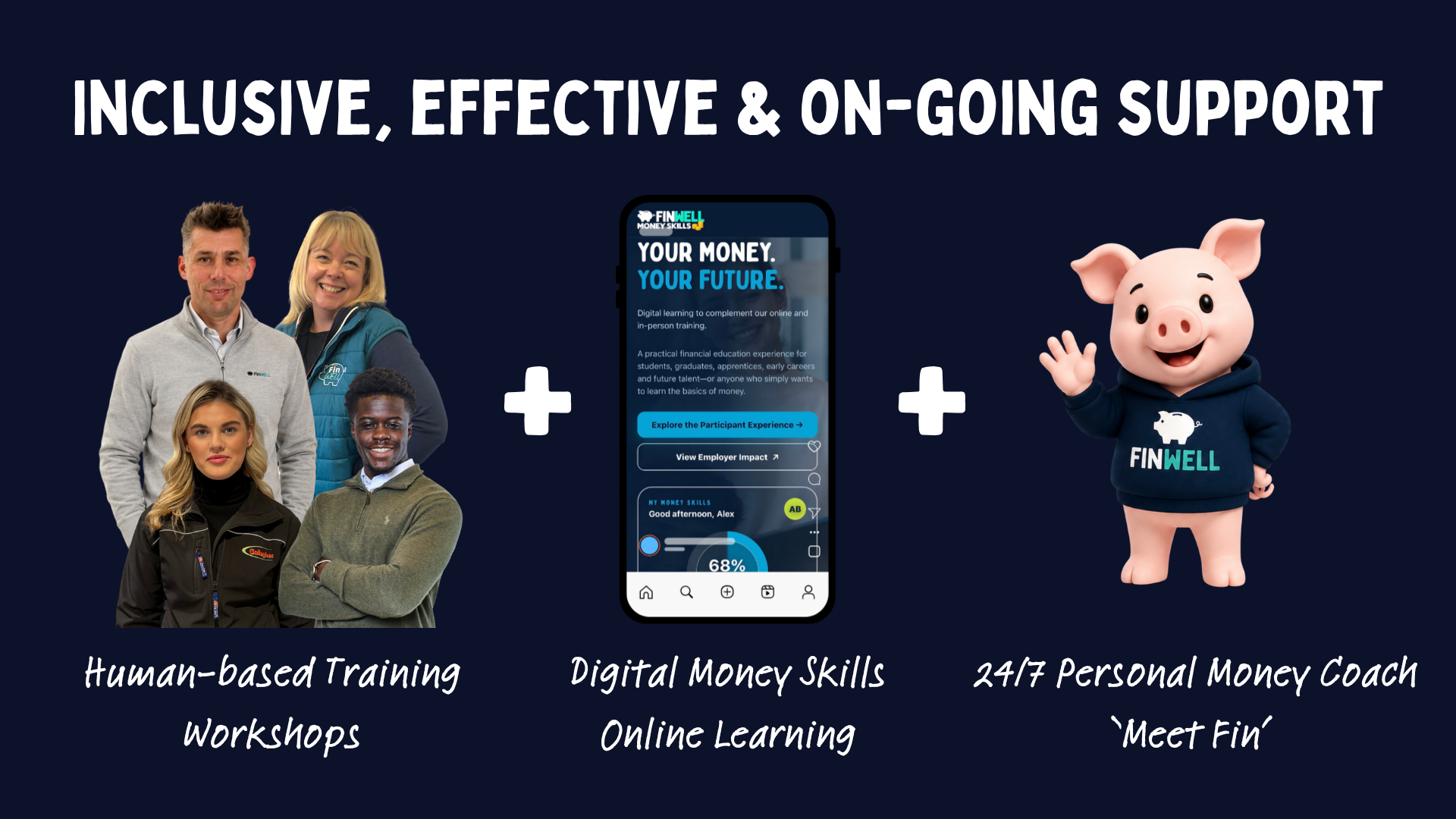
Our session with AoA was designed to give attendees an opportunity to think about their own financial goals and explore practical steps towards them. It covered saving and investing, as well as the foundations of longer-term financial resilience.
Lindsay told us that attendees particularly valued the interactive approach and practical guidance. Reflecting on the collaboration, the team said:
“Collaborations such as this help turn awareness into action, providing apprentices with the knowledge and confidence to make informed financial decisions throughout their careers.”
That’s exactly what we want to achieve at FinWELL. We want people to feel more confident having conversations about money, asking questions and taking the next step—whatever their starting point.
Money skills are for everyone
Although our recent session was delivered for apprentices and early career professionals, these skills are relevant to anyone who wants to understand the basics of managing money and plan for their best possible financial future.
Our Money Skills for Future Talent programme can support:
Students and young adults preparing for working life.
Apprentices developing their careers.
Graduates and early career professionals.
Employers investing in their future talent.
Employees of any age who never had the opportunity to learn the basics.
Because the reality is that many of us are still learning about money long after we’ve left education. There’s no shame in that. What matters is having access to the right information and support when we need it.
Supporting people and creating social value
It’s encouraging to see leading employers engaging with our Money Skills for Future Talent programme and recognising the opportunity to support people as they begin and progress through their careers.
We’re also proud of our social value commitment. Through the programme, bonus training credits can be generated and gifted to people across an employer’s supply chain or within their local communities.
That means an organisation’s investment in financial education can help reach beyond its own workforce, giving more people the opportunity to build confidence and develop skills for their future.
Looking ahead
The Association of Apprentices is doing valuable work to make sure apprentices’ experiences are heard and that financial education becomes a greater priority.
We’re delighted to be collaborating with the team and supporting its members. Together with employers, education providers and community partners, we can help more people gain the knowledge and confidence to make informed decisions about money at the start of their careers and throughout their lives.
If you’d like to learn more about Money Skills for Future Talent, or explore how your organisation could support its people and wider community, please get in touch with the FinWELL team.