Fractional Financial Wellbeing Lead Service
Empowering financially resilient workforces through insight, action, and measurable impact
1. Service Overview
The Fractional Financial Wellbeing Lead (FFWL) service provides employers with expert, flexible, and cost-effective leadership to assess, design, implement, and optimise financial wellbeing strategies.
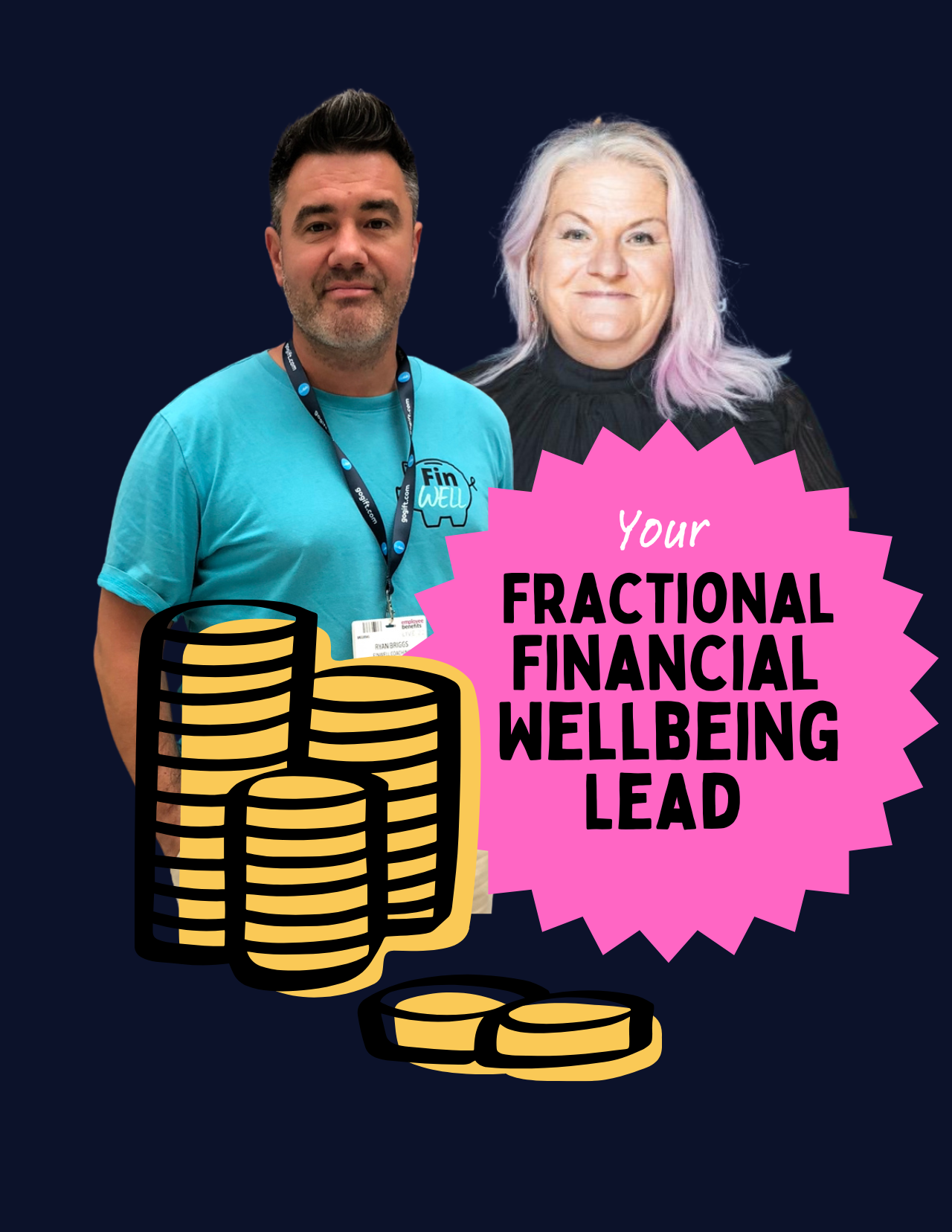
Rather than hiring a full-time specialist, organisations gain access to experienced financial wellbeing leadership on a fractional basis—tailored to their size, sector, and workforce needs.
This service helps employers:
Understand employee financial health and associated risks
Improve engagement with existing benefits
Deliver targeted interventions and education
Enhance overall wellbeing strategy effectiveness
Measure outcomes and demonstrate ROI
2. Core Service Components
A. Financial Fitness & Risk Assessment
A structured diagnostic phase to establish a clear baseline:
Employee Financial Wellbeing Survey
Financial stress levels
Savings resilience
Debt exposure
Financial confidence & literacy
Segmentation Analysis
Demographic insights (age, salary band, role type)
Identification of at-risk groups
Benefit Utilisation Audit
Pension engagement
Salary sacrifice schemes
Employee assistance programmes (EAPs)
Insurance and protection benefits
Organisational Risk Mapping
Absenteeism/presenteeism links
Retention risk
Productivity impact
B. Strategy Design & Planning
Tailored Financial Wellbeing Strategy aligned to organisational goals
Integration into broader Wellbeing & HR frameworks
Defined priority interventions based on workforce needs
Roadmap with short, medium, and long-term actions
C. Intervention & Programme Delivery
A mix of scalable and targeted solutions:
Financial education workshops (live & digital)
1:1 financial guidance sessions
Digital tools and resources
Targeted campaigns (e.g. cost-of-living, debt, saving)
Manager training (to support team conversations)
Lifecycle-based support (early career, families, pre-retirement)
D. Embedding & Engagement
Communications strategy to drive awareness and uptake
Behavioural nudges and engagement campaigns
Integration with existing benefits platforms
Champion networks and internal advocacy
E. Measurement & Continuous Improvement
Ongoing tracking of key metrics
Quarterly reporting dashboards
Insight-led adjustments to interventions
Annual impact and ROI reporting
3. Tiered Support Model
Designed to be accessible, scalable, and flexible for organisations of all sizes.
Tier 1: Foundation (Entry-Level Support)
Ideal for: Small businesses or organisations starting their financial wellbeing journey
Includes:
Baseline financial wellbeing survey
High-level reporting and insights
Benefits utilisation snapshot
1–2 strategic recommendations
Access to digital financial wellbeing resources
Quarterly advisory call
Delivery Model: Remote / light-touch
Indicative Pricing:
£3,000 – £7,500 per year
Tier 2: Growth (Enhanced Support)
Ideal for: Mid-sized organisations seeking structured improvement
Includes:
Full financial fitness and risk assessment
Segmented workforce analysis
Financial wellbeing strategy development
Quarterly workshops/webinars
Communications and engagement plan
Benefits optimisation recommendations
Bi-monthly fractional lead support
Delivery Model: Hybrid (remote + some onsite)
Indicative Pricing:
£10,000 – £25,000 per year
Tier 3: Transformation (Comprehensive Support)
Ideal for: Larger organisations or those embedding financial wellbeing into core strategy
Includes:
Deep-dive diagnostics and workforce segmentation
Full strategy design and implementation roadmap
Regular workshops, campaigns, and 1:1 support
Manager training programmes
Full engagement and communication strategy
Continuous optimisation of benefits offering
Monthly or weekly fractional leadership presence
Detailed reporting and ROI analysis
Delivery Model: Fully integrated (onsite + remote)
Indicative Pricing:
£30,000 – £75,000+ per year
Optional Add-Ons (All Tiers)
1:1 employee financial coaching
Digital financial wellbeing platforms
Pension engagement campaigns
Debt management partnerships
Pre-retirement planning programmes
Salary sacrifice scheme optimisation
4. Key Outcomes & Success Metrics
To demonstrate value and ROI, the service tracks a range of quantitative and qualitative measures:
Employee Outcomes
Reduction in financial stress levels
Increased financial confidence and literacy
Improved savings behaviours
Increased pension contributions or engagement
Reduced reliance on high-cost credit
Business Outcomes
Increased employee engagement scores
Higher benefits uptake and utilisation
Reduced absenteeism and presenteeism
Improved retention, particularly in at-risk groups
Enhanced employer brand and EVP (Employee Value Proposition)
Financial & ROI Metrics
Cost savings from reduced turnover
Productivity gains linked to reduced stress
Increased ROI on existing benefits spend
Engagement rates with financial wellbeing initiatives
Cost per employee vs. impact improvement
5. Value Proposition
The Fractional Financial Wellbeing Lead model delivers:
Expertise without full-time cost
Scalable support aligned to organisational maturity
Data-driven decision making
Stronger alignment between wellbeing and business outcomes
Improved employee experience and financial resilience
6. Implementation Timeline (Example)
Month 1–2: Assessment & diagnostics
Month 3: Strategy development
Month 4–6: Initial interventions & communications rollout
Month 6+: Ongoing delivery, optimisation, and reporting
7. Why This Matters
Financial wellbeing is one of the most significant drivers of employee stress, engagement, and performance. Organisations that proactively support their workforce in this area not only improve individual outcomes but also unlock measurable business value.